Which of these rules of etiquette exists at every workplace?
Though we get to contend in a lot of arguments these days about etiquette; whether they still matter or not as some people believe that these rules of good behaviors are unnecessary or outdated https://deusexmagnifica.com/david-bowie/. Whichever side you choose to stand, the fact is that; everyone loves to receive respect and care or consideration at certain times. In fact, you should never disregard these acts cannot that show courtesy and kindness.
“Sometimes being late is just a bad circumstance, but if you’re late often, then that’s a choice you’re making,” says Grotts. “When you are constantly late, it says that your time is more important than everyone else’s.” Polite manners say you should do your best to be on time as much as possible and to let people know if something has come up and you’ll be late. But if it’s an ongoing problem, you should make a real effort to learn to stop being chronically late.
Most funerals are considered very somber affairs, so the dress code of the past typically reflected that mood. Clothing was usually black, conservative and not revealing. Today, many people consider such a dress code unnecessary—time constraints and lack of formal clothing play a role, but sometimes the grieving simply prefer to see a funeral as a celebration of a person’s life rather than a sad event, Parker says.
Rules of meeting etiquette
To avoid such embarrassing moments, follow this important rule of virtual meeting etiquette: Start up your video software a few minutes before the meeting to check your settings and make sure everything is working correctly. Set your background, test your microphone and video, and correct any issues so you’re able to actively participate when the meeting starts.
A lot of these meeting rules for participants could be summed up in this last one. Preparation, listening, nonverbal communication — all are signs of respect. But showing concern for your co-workers goes beyond these small things to how you communicate in the meeting.
As a leader, you can find a balance between actively listening and participating in discussions. A good rule of thumb is to listen at least twice as much as you speak, especially when there are a lot of people in the room.
Virtual meeting etiquette is all about showing professionalism and respect in an online setting. It’s about keeping distractions at bay, maintaining good team etiquette, and ensuring that communication flows smoothly. In essence, it’s everything you’d do in an in-person meeting—just with the added twist of WiFi, video calls, and the occasional pet cameo.
As a leader, employees will look to you to understand your company culture when it comes to conduct at meetings. Meeting etiquette rules hold you to a high standard of behaving appropriately and in a way that is also matched by your reports.
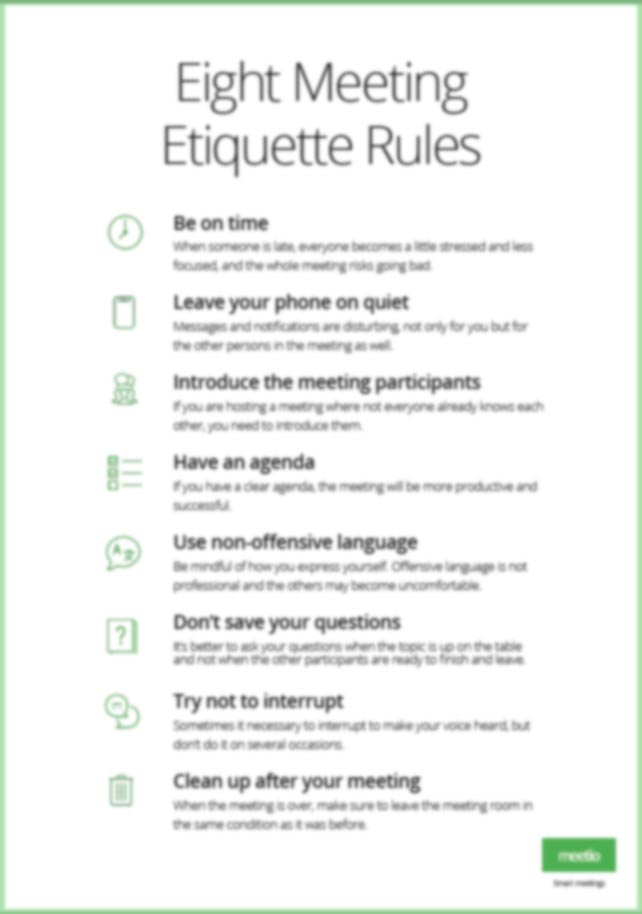
Where would an employee find an employers rules of etiquette
Etiquette directly influences how an employee is perceived. Each person represents a personal brand, and how they behave especially in communication and day-to-day interactions can make a lasting impression on others and shape their professional reputation.
Basically, it is about how you conduct yourself around coworkers, potential business partners, and customers. It boils down to treating others with respect, to be aware of everyone present and to be polite overall.
Clear and respectful business communication is essential for upholding professionalism in any workplace. According to a study published in Oklahoma State Medical Proceedings, organizations that train employees in handling crucial conversations see significant improvements in teamwork, stress management, and overall workplace dynamics. In fact, Forbes reports that effective communication can increase productivity by up to 25% especially when team members feel connected and aligned.
If one person does not do his portion of the job, the other members of the team are compelled to take the stress. And it may create resentment among coworkers and productivity losses, which will ultimately cost the company.
Time is a shared resource and how your employees manage it sends a clear message about their professionalism. Being punctual isn’t just a nice-to-have trait; it’s a core part of work etiquette. It demonstrates respect for others’ schedules and keeps workflows running smoothly.
All of your colleagues deserve respect, even though they are not always respectful towards you. It’s essential to learn to acknowledge other people’s religious views, political opinions, and sexual preference. You don’t have to agree with them all the time, but maintaining respect is proper etiquette.